

Caste & Untouchability
A study-research paper in the Indian Subcontinent
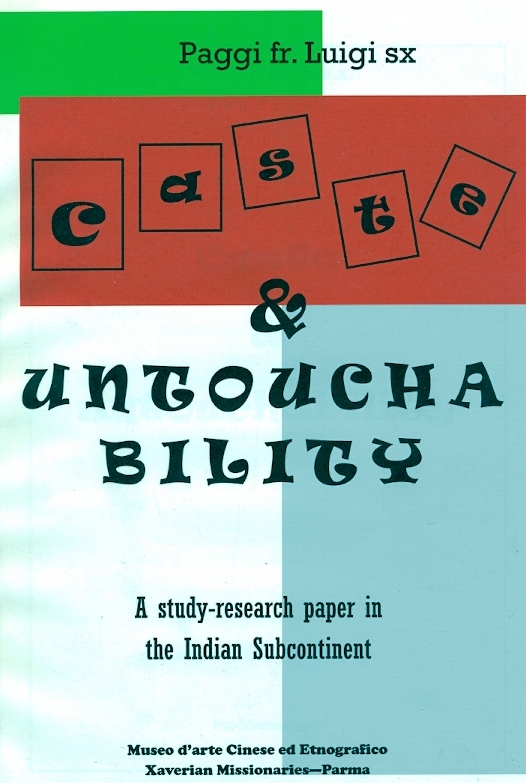
- Categoria: Dattiloscritti
- Autore: PAGGI Luigi
- Editore: Pro manuscripto
- Pagine: 185
- Biblioteca: Archivio Saveriano Roma (ASR)
- Luogo: Parma
- Anno: 2002
- N° catalogo: XIII.30
-
Link:
 scarica o visualizza il file
- Note: Title: Caste & untouchability. A study-research paper in the Indian Subcontinent Authored by: Paggi fr. Luigi sx Edited by: Jo Ellen Fuller- 2002 Photographs by: Angelo fr. Costalonga sx Printed by: “Museo d’Arte Cinese ed Etnografico di Parma” - 2005 © 2
Visite: 1017
Scheda informativa
A few years ago, my confreres (Xaverian Missionaries working in Bangladesh) requested that I conduct a four-day course on caste and untouchability. Probably, I benefited as much from teaching the course as my student-confreres did since the process helped me crystallize my ideas about Hinduism and the ramifications of certain aspects of this religion upon the cultures of the subcontinent.
From time to time, I am invited to different places to deliver lectures on these two topics. I usually accept these invitations because I am convinced that those who would like to do something to change the miserable lot of so many poor people living in the Indian Subcontinent must be knowledgeable about the caste system and untouchability.
People need to be aware of the negative effect and the impact of these two social evils regarding the abject misery and poverty of those who are at the bot-tom of the greater society.
It seems that people living in the Indian Subcontinent , no matter which reli-gion they belong to, are still affected (consciously or unconsciously) by these as-pects of Hinduism that have seeped into other religions as well.
In order to prepare myself for the task of lecturing (on caste and untoucha-bility), I read and studied many books, magazines and articles on these two evil institutions of Hinduism, which have affected the social life of most of the people living in the Indian Subcontinent. Through these studies and through the experi-ences gained from living twenty-five years in Bangladesh, I have been able to ac-quire some knowledge about caste and untouchability which I wish to share.
There are many publications (some out of print) on caste and untouchability but it would be quite difficult for ordinary readers to find and sift through them. For this reason, some of my confreres repeatedly requested that I put together all my notes on these two topics and at the same time to signal the most important books and publications which deal with these two aspects of life on the Indian subcontinent.
In addition to my confreres, a good number of NGO people who know that I have acquired an awareness about caste and untouchability have expressed the same request again and again. Because of decades of work at the grass roots level with the Bangladeshi untouchables (Rishi), I have gained an in-depth knowledge of the caste system through experience, study, and interaction with the people.
Since I perceive a genuine desire on the part of others to learn more about the caste system, I would like to address this desire by formalizing my notes. Af-ter much thinking, I have decided to apply myself to this time consuming task. Time needed for this work will not be wasted and labor will be rewarded if this study-research can be of any help, at least to those who have asked for it.
In order to write this study-research in English, the help and co-operation of a special person, the Community Liaison Office Coordinator of the U.S. Embassy/Dhaka: Ms. Jo Ellen Fuller was needed. This work has been a unique joint venture between an Italian, Catholic Missionary and an American, Protestant layperson. Without Jo Ellen's prodding, all my notes on caste and untouchability would have remained in the drawer of my desk and cockroaches would have eaten them up.
Ms. Fuller spent hours revising drafts and editing chapters which shows her deep interest in this research.
Moreover she developed a strong interest for the out caste Rishi people and has helped the Xaverian Missionaries working among these Rishis living in the vil-lages around the Catholic Mission of Chuknagar, Dumuria, and Khulna in Bangla-desh.
In 1999, Jo Ellen was honored when she was chosen with five others around the world to receive the Secretary of State Award for Outstanding Volunteerism abroad. She was given this award by Madeleine Albright, the US Secretary of State, on May 5, 2000. Along with the US Ambassador to Bangladesh, the Xaverian Missionaries and the Rishi people also think that Ms Jo Ellen Fuller de-served the award in recognition of her extraordinary volunteer service overseas which demonstrate the difference one person can make in the lives of others. Both the Xaverian Missionaries working in Chuknagar Catholic Mission and the Ri-shi people will be grateful to this person forever.
Thoughts and ideas expressed in this study - research may not fully be agreed upon by the readers. The author welcomes any kind of questions, criticism, suggestions, or additions.
Fr. Luigi Paggi s.x